 Reviews



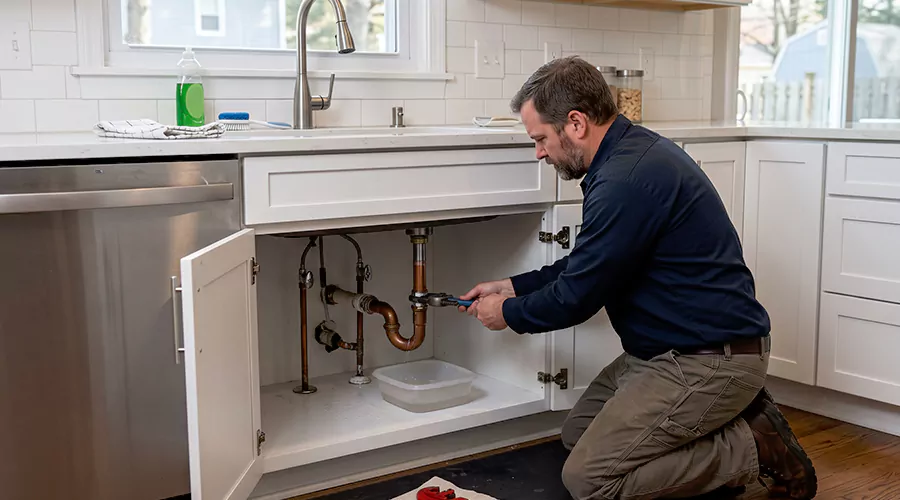
A burst water pipe usually results from excessive pressure or damage that weakens the pipe wall or its connections. Frozen water and corrosion are common contributing factors. Poorly assembled fittings or accidental damage can also cause pressurized water-supply pipes to fail. Pipe repair can address burst sections, damaged fittings, and other plumbing issues to help restore a reliable water supply.
A burst supply pipe deserves immediate attention because water can continue escaping until the affected line is isolated.
Understanding the causes of a burst water pipe is especially useful when damage occurs without warning or several supply connections have failed.
How Is a Burst Water Pipe Different From a Drainage Leak?
Water-supply pipes and drainage pipes operate differently.
A household supply pipe normally remains pressurized even when every faucet is turned off. A drainage pipe generally carries wastewater away through gravity.
This distinction affects how much water can escape after damage occurs.
| Plumbing System | Normal Operation | Typical Failure Symptom |
|---|---|---|
| Cold-water supply | Remains pressurized | Water escapes continuously |
| Hot-water supply | Remains pressurized | Hot water may escape continuously |
| Household drainage | Carries wastewater during use | Leakage during drainage |
| Underground water service | Supplies the property | Unexplained water loss |
| Outdoor supply piping | May be exposed to cold weather | Freeze-related damage |
A supply pipe can release water continuously because it remains connected to the property's water source.
That is why shutting off the water is the first response to a confirmed burst.
How Does Water Pressure Contribute to Pipe Bursting?
Water pressure creates force inside pressurized plumbing. Pipes and fittings are designed to withstand normal operating conditions.
However, excessive pressure increases the stress acting on those components.
A weakened pipe may fail when its remaining strength is insufficient.
This can occur when an older connection has already deteriorated.
Pressure changes can also expose weaknesses in incorrectly installed fittings.
A pressure problem should be confirmed through appropriate measurement rather than inferred from pipe noise or one isolated leak.
Replacing the damaged section without correcting confirmed pressure problems may leave other vulnerable components exposed.
Why Are Corroded Water Pipes More Vulnerable?
Corrosion can gradually reduce the thickness of certain metal water pipes.
The deterioration may occur internally before the damage becomes visible.
A weakened area can eventually develop a pinhole leak or a larger failure.
Several warning signs may indicate deterioration:
- Repeated leaks along older metal piping.
- Corrosion concentrated around threaded fittings.
- Discoloration associated with deteriorating plumbing.
- Several joints developing similar problems.
- Visible deterioration on exposed sections.
Corrosion does not affect every pipe at the same rate.
Water chemistry and the material's condition can influence how damage develops.
How Does Freezing Cause a Burst Water Pipe?
Freezing can create an ice blockage inside a vulnerable supply pipe.
As additional ice forms, pressure may increase in liquid water trapped between the blockage and a closed faucet.
The pipe can then fail at its weakest point.
University of Illinois research established that the pressure in trapped water is the main mechanism responsible for many freeze-related pipe ruptures. The failure often occurs beyond the frozen section itself.
A burst may remain unnoticed while ice blocks the water.
When the ice melts, normal supply pressure can force water through the damaged area.
Which Water Pipes Are Most Vulnerable to Freezing?
Exposure determines which pipes are more likely to freeze.
Pipes installed inside warm spaces generally receive greater protection than those exposed to outdoor air or unheated areas.
Common vulnerable locations include:
- Exterior walls.
- Unheated garages.
- Crawl spaces.
- Attics.
- Outdoor faucets.
- Exposed service areas.
- Poorly insulated utility spaces.
Illinois Extension recommends identifying vulnerable pipes before freezing weather and protecting them with suitable insulation.
Insulation alone may not provide adequate protection during prolonged severe cold.
Can Incorrect Installation Cause a Burst Water Pipe?
Improper installation can create weak points in the water-supply system.
A connection may fail when the fitting is incompatible with the pipe or has not been installed according to the manufacturer's instructions.
Possible installation problems include:
- Incorrectly assembled fittings.
- Incompatible connection components.
- Inadequately supported piping.
- Excessive stress on rigid connections.
- Incorrect installation of flexible supply components.
Some defects may remain unnoticed until the plumbing experiences normal pressure changes.
A failed connection should be inspected before replacing parts.
The surrounding plumbing may also require attention if it was assembled using the same incorrect method.
What Warning Signs Suggest a Supply Pipe Is Damaged?
Pressurized plumbing may develop several symptoms before a major failure occurs.
Watch for these warning signs:
- Repeated moisture appears around a supply fitting.
- A pipe develops visible corrosion.
- Water pressure changes unexpectedly.
- A wall develops unexplained dampness.
- Several supply connections begin leaking.
- Water consumption increases unexpectedly.
- A pipe produces unusual movement during operation.
- Water flow stops during freezing weather.
- Moisture appears after a frozen section thaws.
- A repaired connection begins leaking again.
Some failures happen without visible warning.
Routine inspections can reveal accessible damage, but they cannot identify every hidden weakness.
What Should You Do if a Supply Pipe Bursts?
A burst water-supply pipe can release water continuously until the supply is isolated.
The response should prioritize stopping incoming water and avoiding electrical hazards.
Follow this sequence:
- Keep people away from the damaged area.
- Locate the appropriate water shutoff valve.
- Close the main valve if a local valve cannot isolate the leak.
- Avoid standing water near electrical equipment.
- Open accessible faucets to relieve remaining pressure when safe.
- Protect nearby belongings without entering hazardous areas.
- Record visible damage.
- Arrange repair before restoring the supply.
Do not attempt to apply a patch while water is spraying from a pressurized pipe.
Progressive's June 2026 guidance identifies immediate water isolation as the first step after a household pipe burst.
How Can You Determine Why the Pipe Burst?
The damaged pipe's condition can provide clues about the cause.
For example, extensive corrosion may suggest long-term deterioration.
Damage appearing immediately after freezing weather raises the possibility of freeze-related failure.
The investigation should consider:
- Pipe material and approximate age.
- Whether freezing occurred.
- Visible corrosion.
- The location of the damaged section.
- Previous repairs.
- Nearby damaged connections.
- Any recent construction work.
A visible crack cannot always reveal the complete failure mechanism.
If the problem resulted from abnormal system pressure, the damaged pipe may not be the only vulnerable component.
How Much Does Burst Water Pipe Repair Cost?
Repair costs depend on the pipe material and location.
The price can increase substantially when the damaged pipe is concealed or the surrounding building materials require restoration.
| Repair Category | 2026 U.S. Cost |
|---|---|
| Typical burst pipe repair | 200–3,000 |
| Average repair | Approximately $500 |
| Repair per linear foot | 150–250 |
| Emergency service call | 100–300 |
| Extensive damage | Can exceed $5,000 |
These figures reflect Angi's August 2026 U.S. pricing report. They are general cost references rather than estimates for one specific property.
When Should You Call a Professional?
A confirmed burst supply pipe requires appropriate repair before the water supply is restored.
Professional diagnosis is particularly important when the cause may extend beyond one damaged section.
Seek assistance when:
- The main water supply is damaged.
- Several connections have failed.
- Freeze damage may affect additional pipes.
- Excessive pressure is suspected.
- A pipe has burst behind a wall.
- Underground piping is affected.
- Extensive corrosion is visible.
A permanent repair should correct the damaged section and address any confirmed underlying problem.
How Can You Prevent Burst Water Pipes?
Preventive measures should address both freezing and the condition of the water-supply system.
Useful habits include:
- Insulate exposed supply pipes.
- Maintain heating during cold weather.
- Disconnect outdoor hoses before freezing temperatures.
- Investigate recurring pressure-related problems.
- Replace severely deteriorated connections.
- Protect pipes during renovation work.
- Check for unexplained moisture.
- Keep the main shutoff valve accessible.
Inspecting vulnerable plumbing before winter can reduce exposure to freezing conditions.
Conclusion
A burst water pipe commonly results from excessive pressure acting on weakened plumbing. Freezing and corrosion are important contributing factors. Installation defects or accidental damage can also create weak points. Identifying the cause helps determine whether repairing one section is sufficient. Shut off the water immediately after a confirmed burst and restore the supply only after the damage has been addressed. Inspect vulnerable plumbing before severe weather.
Frequently Asked Questions
Can excessive water pressure burst a supply pipe?
Yes. Excessive pressure can contribute to failure when a pipe or connection cannot withstand the stress.
Why do water pipes burst after freezing?
Ice can trap liquid water and create pressure that damages the pipe. The leak may become visible during thawing.
Can plastic water pipes burst?
Yes. Plastic piping can develop freeze damage or fail when its material or connections are subjected to unsuitable conditions.
Does a burst pipe always cause immediate flooding?
No. An ice blockage or an isolated supply can temporarily prevent water from escaping.
Can replacing one burst pipe prevent another failure?
It depends on the cause. Widespread corrosion or an unresolved pressure problem may affect additional plumbing.